Vasil Levski: The Man Who Dreamed of a Free Bulgaria
The revolutionary whose vision of a free and democratic Bulgaria continues to inspire generations.
Few historical figures are as deeply revered in Bulgaria as Vasil Levski. Known as the Apostle of Freedom, he devoted his entire life to the liberation of Bulgaria from Ottoman rule and remains one of the most respected personalities in the nation's history.
Levski was far more than a revolutionary leader. He envisioned a free and democratic Bulgaria founded on equality, justice, and the rule of law. At a time when much of Europe was still shaped by monarchies and empires, his dream of a 'pure and sacred republic' was remarkably modern.
Although he was executed in 1873 and never witnessed Bulgaria's liberation, his ideals, courage, and self-sacrifice transformed him into a moral symbol whose influence continues more than 150 years later.
Early Life in Karlovo
Vasil Ivanov Kunchev was born on 18 July 1837 in Karlovo, a picturesque town nestled at the foot of the Balkan Mountains. Today, Karlovo is one of Bulgaria's most important historical destinations and attracts visitors from across the country and abroad.
As a young man, Levski entered monastic life and became a deacon under the name Ignatius, earning the popular nickname Deacon Ignatius. However, he soon realized that his true calling lay in serving the Bulgarian people through the struggle for national liberation.
The name 'Levski', meaning 'lion-like', is believed to have originated during military training in Belgrade, where he reportedly performed an impressive leap that earned him the nickname that would become legendary.
Building Bulgaria's Secret Revolutionary Network
Unlike many of his contemporaries, Levski believed that Bulgarians themselves had to win their freedom rather than rely on foreign powers. To achieve this, he traveled tirelessly across Bulgarian lands, often disguised and frequently on foot.
Between 1869 and 1872, he established dozens of secret revolutionary committees in towns and villages throughout the country. These committees collected funds, recruited supporters, and prepared the population for a future uprising against Ottoman rule.
Historians consider the Internal Revolutionary Organization created by Levski one of the most sophisticated underground movements in nineteenth-century Europe. Its structure later became the foundation of Bulgaria's national liberation movement.
Levski demanded honesty, discipline, and self-sacrifice from both himself and his followers. He possessed almost no personal wealth, sought no political office, and dedicated every aspect of his life to the cause of freedom.
The Dream of a 'Pure and Sacred Republic'
Perhaps Levski's greatest legacy was not the revolutionary organization he built, but the ideals he championed. He imagined Bulgaria as a democratic republic where all citizens would enjoy equal rights regardless of ethnicity or religion.
His famous words, 'We shall be equal with all other European nations,' reflected a vision that was extraordinary for its time. In Levski's future Bulgaria, Bulgarians, Turks, Jews, Armenians, and all other communities would live as equal citizens under the law.
This vision of a 'pure and sacred republic' continues to shape how Bulgarians remember him today.
Capture, Trial, and Execution
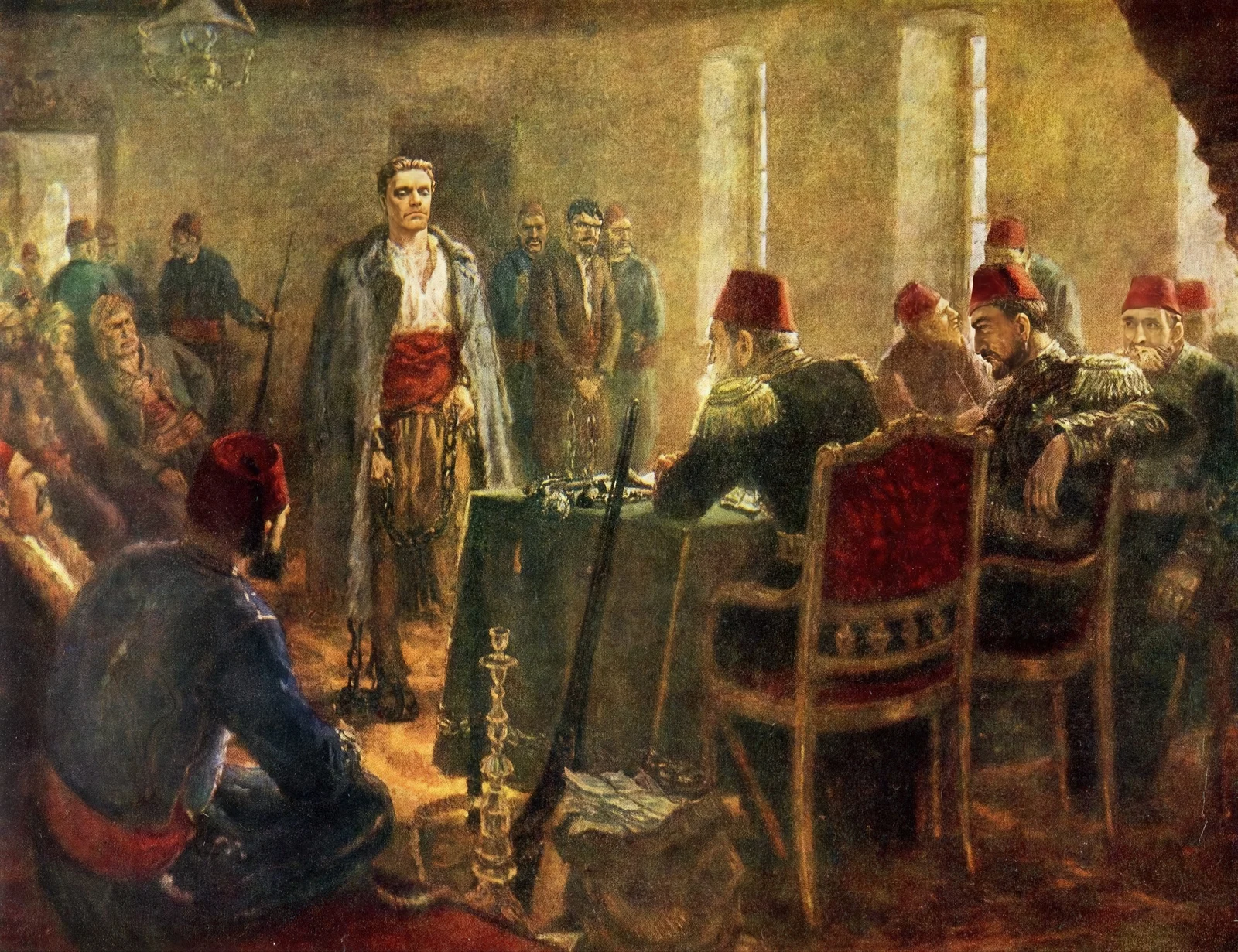
In December 1872, Levski was captured by Ottoman authorities near Lovech after part of the revolutionary network had been compromised. He was taken to Sofia, where he was interrogated and sentenced to death.
On 18 February 1873, Vasil Levski was executed by hanging. He was only thirty-five years old.
His death shocked Bulgarian society. Rather than ending the liberation movement, it strengthened the determination of revolutionaries and inspired future generations to continue the struggle that would ultimately lead to Bulgaria's liberation in 1878.
Visiting Vasil Levski's Birthplace in Karlovo
Anyone interested in Bulgarian history should visit Karlovo, the birthplace of Vasil Levski. The National Museum 'Vasil Levski' preserves his family home, personal belongings, historical documents, and exhibitions dedicated to his life and revolutionary activities.
Another important landmark is the Church of St. Nicholas in Karlovo, which preserves a lock of Vasil Levski's hair. This rare relic is regarded as one of Bulgaria's most significant historical treasures and attracts thousands of visitors each year.
For many Bulgarians, visiting Karlovo is more than a historical excursion—it is a pilgrimage to one of the most sacred places in the country's national memory.
While in Karlovo, travelers can also explore the town's charming old quarter, nearby hiking trails, and the beautiful landscapes of the Central Balkan National Park.
Famous Quotes by Vasil Levski
Vasil Levski left behind not only a revolutionary organization, but also a remarkable legacy of ideas and reflections. Many of his words continue to inspire Bulgarians today.
"If I win, I win for the whole people. If I lose, I lose only myself."
"Time is in us and we are in time; it turns us and we turn it."
"We shall be equal with all other European nations."
"Our goal is a pure and sacred republic."
Why Bulgarians Still Revere Levski
Today, monuments dedicated to Vasil Levski can be found in virtually every Bulgarian town and city. Schools, institutions, streets, and even Bulgaria's national football stadium bear his name.
More than a century and a half after his death, Levski remains not only a historical figure but also a moral ideal. Bulgarians admire him because he sought neither wealth nor power, dedicating his entire life to the freedom of his people.
For generations of Bulgarians, Vasil Levski has come to embody patriotism, integrity, courage, and selfless devotion to a greater cause.
Frequently Asked Questions
- Why is Vasil Levski called the Apostle of Freedom?
- He is known as the Apostle of Freedom because of his leading role in organizing the Bulgarian revolutionary movement and inspiring the struggle for national liberation.
- Where was Vasil Levski born?
- Vasil Levski was born in the town of Karlovo in central Bulgaria on 18 July 1837. His birthplace is preserved as a museum open to visitors.
- Where can visitors see a lock of Vasil Levski's hair?
- A lock of Vasil Levski's hair is preserved in the Church of St. Nicholas in Karlovo, making it one of Bulgaria's most important historical relics.
- What did Vasil Levski mean by a 'pure and sacred republic'?
- Levski envisioned a democratic Bulgaria where all citizens, regardless of ethnicity or religion, would enjoy equal rights and live under the rule of law.
Related Articles
More articles coming soon.